
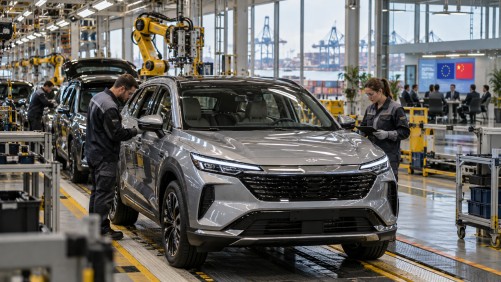
China and the European Union have reached an agreement to regulate the export of hybrid vehicles, a move that could pose new challenges for Chinese automakers while potentially encouraging them to increase manufacturing in Europe. The decision comes amid a surge in Chinese vehicle exports and rising competition in the European automotive market.
In the first half of 2026, Chinese hybrid vehicle exports to the EU soared to $7.5 billion, up from $2.5 billion in the same period the previous year. The popularity of plug-in hybrids has grown since the EU imposed additional tariffs on Chinese-made fully electric vehicles in 2024, while hybrids remained exempt from those duties.
Major Chinese automakers like BYD, SAIC, and Chery have benefited from the demand for vehicles that integrate electric and conventional engines, gaining significant traction in Europe. However, this rapid influx of imports has heightened competitive pressures on European manufacturers such as Volkswagen.
The specifics of the agreement, including potential import quotas and implementation guidelines, remain under discussion. Chinese authorities have expressed optimism that exports will continue to grow, whereas EU officials anticipate a gradual limitation on the volume of imported vehicles.
Some industry leaders see the agreement as a way to avoid escalating trade tensions. Changan, for instance, has suggested that establishing local production facilities could help Chinese manufacturers retain their market access in Europe, with plans for regional production expected to proceed.
Analysts predict that the deal might encourage Chinese automakers to build more factories in Europe. While larger companies might manage the investment costs, smaller firms could find it more challenging to expand their operations. Although the agreement may alleviate immediate tariff concerns, uncertainty about future import restrictions persists. The long-term effects will hinge on the final regulations and the strategies adopted by both Chinese and European manufacturers in terms of pricing, production, and market positioning.