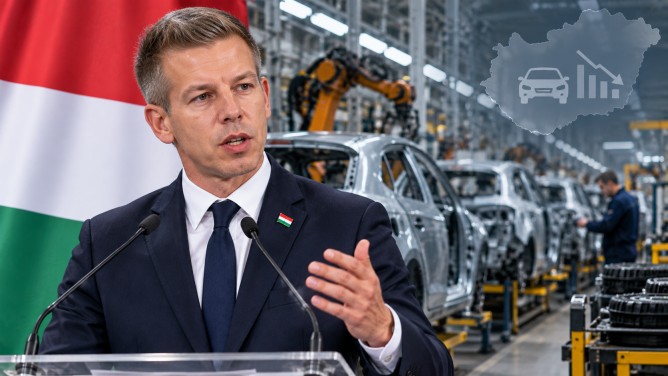
Hungary has become a key player in the European automotive industry, attracting significant investments from major car manufacturers. Companies like BMW, Mercedes-Benz, and Volkswagen have increased their presence in the country, with BMW investing close to €2 billion in its Debrecen plant, capable of producing 150,000 vehicles annually. Mercedes-Benz is expanding its operations in Kecskemét, while Volkswagen maintains extensive engine and vehicle production in Győr. The region has also seen growth in electric mobility and battery production, with Chinese automaker BYD developing a passenger-car facility in Szeged and companies like CATL and EVE Energy setting up battery plants near Debrecen.
The automotive boom has been supported by Hungary’s favorable corporate tax rate of 9% and lower labor costs, which in 2025 averaged around €15.20 per hour, much lower than Germany’s €45. Projections indicate that Hungary could be producing approximately 541,000 vehicles annually by 2028. Additionally, the country hosts battery manufacturing operations by South Korean giants SK Group and Samsung, indicating a broad interest in Hungary’s automotive sector.
Despite these developments, the industry might face challenges as Prime Minister Péter Magyar’s administration plans to introduce stringent environmental regulations, cut corporate incentives, and raise wages. There are already regulatory actions against companies like CATL over wastewater management, and Semcorp has faced suspensions due to environmental and fire safety issues. Magyar’s proposals include higher charges for polluters and a reduction in tax benefits for multinational corporations, potentially impacting the sector’s attractiveness.
The planned increase in minimum wage to 1 million forints by 2030 raises concerns among industry insiders, who fear that rising wages, coupled with stricter rules and fewer incentives, could undermine the competitiveness of Hungary’s burgeoning battery and electric vehicle production. This could also have repercussions for Austria, which exported €925 million worth of automotive components to Hungary in 2024. Austrian suppliers, providing essential parts like electric motors and steel components, could be affected by changes in Hungary’s production landscape.
While Hungary remains crucial for manufacturing, technology transfer, autonomous vehicle development, and research collaborations, the future of its automotive industry is closely tied to the policies of Magyar’s government. Industry representatives emphasize the importance of maintaining a favorable environment for growth to ensure continued success in the sector.