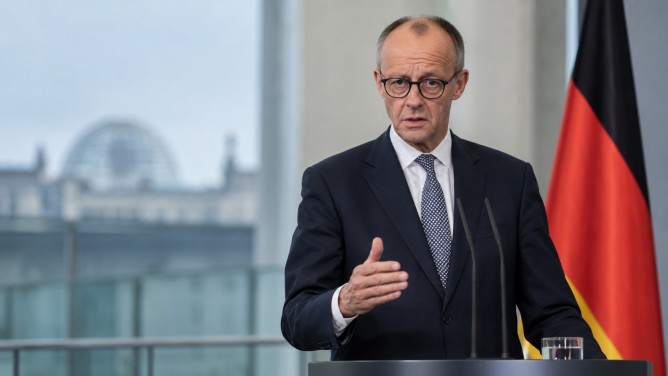
Germany’s Christian Democratic Union (CDU), led by Chancellor Friedrich Merz, has suffered considerable losses in recent regional elections, with the far-right Alternative for Germany (AfD) gaining momentum in key areas. In Berlin, the left-wing Die Linke topped the polls with 25.7% of the vote, outpacing the CDU’s 18.8%, while the AfD secured 16.3%, marking a notable rise in support.
Meanwhile, in Mecklenburg-Western Pomerania, the AfD achieved a significant breakthrough, capturing 38.2% of the vote to become the leading party, narrowly surpassing the Social Democrats, who garnered 35.5%. The CDU’s performance was dismal, receiving only 4.9% and failing to meet the 5% threshold required for representation in the state parliament.
These electoral outcomes have intensified scrutiny on Merz’s leadership, especially after a similar pattern of strong AfD performance was observed in Saxony-Anhalt earlier this month. Despite the mounting pressure, Merz has affirmed his intention to remain in office, focusing on advancing his administration’s economic and social reform agenda.
The election results underscore growing political divisions within Germany, as the AfD continues to solidify its influence in eastern regions, while Die Linke gains traction in urban centers like Berlin. This shift is expected to spark internal debates within the CDU over its strategic direction and leadership moving forward.