
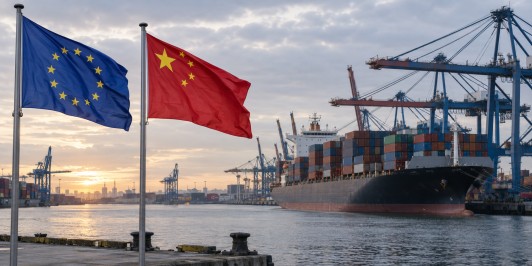
The European Union’s trade deficit with China surged to €36.5 billion in July 2026, as the bloc continued to import significantly more goods from China than it exported. According to data from Eurostat, this imbalance intensified with EU imports from China rising 8% year-on-year to €53.9 billion, while exports to China saw a slight decline of 1.6% to €17.4 billion.
This growing deficit underscores a broader trend over the first seven months of 2026, where the EU’s trade shortfall with China amounted to approximately €234 billion. This widening gap is prompting European officials to explore measures aimed at rebalancing trade relations, particularly focusing on sectors such as hybrid vehicles and chemicals.
One area of concern is the sharp increase in imports of hybrid vehicles from China. This trend has emerged since the EU imposed additional tariffs on Chinese electric vehicles in 2024, which treated hybrid models differently. In response, EU officials are considering voluntary limits on Chinese hybrid vehicle exports as a potential solution to ease trade tensions.
The ongoing disparity in trade is expected to be a pivotal issue in the forthcoming EU-China discussions. Brussels is keen on enhancing European exports while simultaneously reducing dependency on Chinese goods, particularly in strategic sectors. These discussions are part of broader efforts by the EU to achieve a more balanced economic partnership with China.