
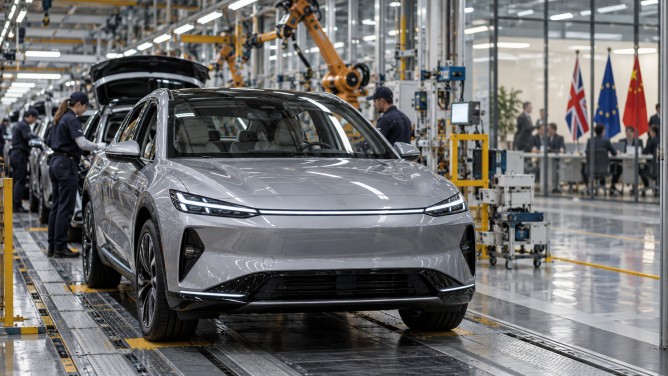
The United Kingdom is contemplating the imposition of tariffs on electric vehicles imported from China as it explores joining the European Union’s proposed Made in Europe industrial scheme. This potential move is seen as a strategy to bolster British manufacturing links with the EU, although it may escalate trade tensions with China.
The EU’s proposed Industrial Accelerator Act, backed by countries like France and Germany, aims to support European manufacturers by prioritizing locally produced goods and addressing competition from subsidized imports. As part of this initiative, the UK might be required to align with EU trade defense measures, which include proposed tariffs on Chinese electric vehicles set to be implemented in 2024.
UK officials have indicated that discussions are still in the preliminary stages, emphasizing that the country will retain its independent trade policy. Meanwhile, China has expressed opposition to the potential restrictions, arguing that such tariffs could disrupt free trade and negatively affect bilateral economic relations.
The decision carries significant implications for the British automotive industry, which heavily depends on exports and the European supply chain. Participation in the EU’s industrial initiative could enable British manufacturers to remain competitive, but the introduction of tariffs could lead to increased vehicle prices and potential retaliatory actions from China.
The EU is expected to proceed with the Industrial Accelerator Act by late 2026 or early 2027, and negotiations concerning British involvement and possible trade commitments are still ongoing. The outcome of these talks will likely shape the future of UK-EU industrial cooperation and its trade dynamics with China.